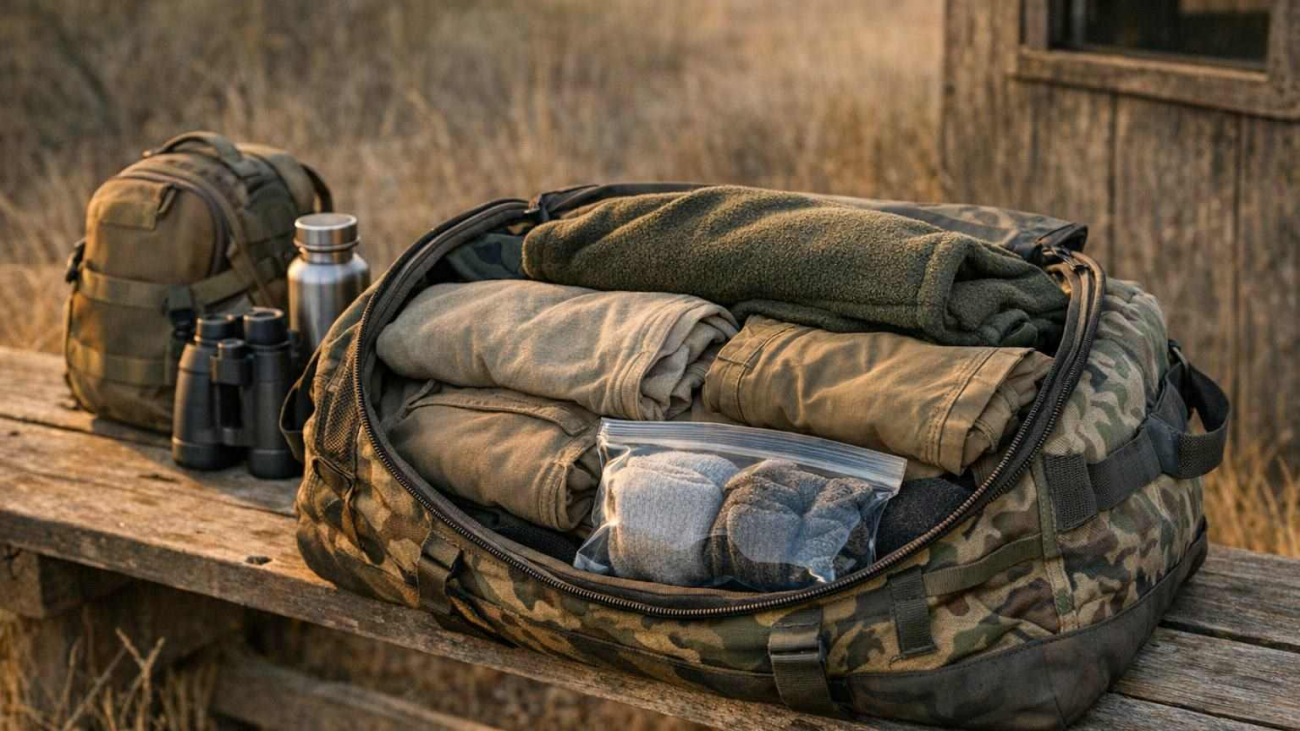
Yes, Texas is a warm weather location for hunting. However, there are large temperature swings during the day and even cooler temperatures in the late afternoon and early morning hours. As a result, items that provide comfort during your day's hunting will be needed. Additionally, items that will keep you quiet and able to make a quick and correct decision in the field are necessary. Because of the limited space in Marcus' vehicle for his guided deer hunt at a Texas ranch, his hunting trip packing list has been detailed to allow for the best hunting experience possible. Each layer, pocket and even backup items have been considered to ensure that the best possible items are taken.
Start with the day's temperature swings
Travel and setup: hot, walk to blind. Sit for long periods of time: warm for first part of day and then cool down for late afternoon/evening. If hunting dawn and dusk, then cooler for these times. So a light-weight, breathable shirt and pants for warmer times, with a change of base clothing for cooler times. You will need long sleeves for sun/insect protection while walking to blind.
For warm afternoons, a breathable long-sleeved hunting shirt, lightweight hunting pants, and moisture-wicking socks will provide the best basis for comfort on the Texas ranch. Long sleeves can provide protection from insects, sun, and brush, but must be able to be easily stowed when excessive heat becomes a problem. A brimmed hat for your head and neck, quality hunting glasses to protect your eyes, and plenty of broad-spectrum sunscreen for your skin and lips are also needed for comfort on the late afternoon hunt.
A good packer will always include an extra change of base clothing. Because if you get wet or sweaty, that can become a huge distraction on an already long day. So put an extra change of base in a sealed bag of some sort and be good to go.
Build layers that can be removed quietly
Your evening clothing layers will serve the same purpose as your midday layers. Find a warm midweight shirt or fleece and a light weight outer shell for wind or rain. Determine what layers you will need based on the weather forecast for the ranch and the type of terrain that you will be hunting. Test your clothing for quiet removal and addition of layers. Can you put on and take off your hood without a loud sound? Can you remove your jacket without your hearing protection falling off? Will your collar get in the way of your optics?
Clothing that is quietly constructed for a hunter to be able to remove layers for warmth while in the stationary sit is very important. This gear can be tested for rub points, for hood interference with hearing protection, for collar interference with glassing, etc. before you leave for your hunt. These items that could cause problems for a hunter would be very problematic in a sit where the hunter would not be able to move without detection of game.
In addition to allowing for movement, cool evening layers should also enable Marcus to maintain a safe and controlled position in the field. A jacket with tight shoulders would hinder his ability to hunt effectively. Try to find clothing that will fit over your base layer and won't bind in any areas. Also, try to keep your warmest layer on top so you can easily add and remove it as needed throughout the day.
Make the gear serve the guide's plan
Ask your outfitter or guide for information on how much time you will be walking, sitting and riding in vehicles. Ask about the lodgings where you will be staying and if there is laundry available. Ask about the weather and be prepared for it. Ask if you will need a daypack for your hunt. As mentioned above, each ranch has its own list of rules and regulations for the gear that is allowed. In Texas, you can find current information on all rules, regulations and licensing requirements from official Texas hunting sources. Confirm all of this information with your guide before you leave for your hunt.
Instead of hauling the entire contents of your house to the field, pack a simple day pack for the hunt that includes items such as water, a snack, an additional pair of socks, a change of base clothing, any personal medications, sunscreen, lip balm, tissues, and your phone (fully charged) with the volume turned down. Any additional documents required for the hunt should be stored in a secure pocket on your pants.
Find places in your clothing to put small items such as your keys, etc. in the pocket of your clothing. Keep items in retail packaging such as plastic or hard container to a minimum. Small items such as tissue, etc. can be stored in a soft pouch or sac made of material such as cloth or even plastic. Test your clothing at home before departing on your trip with all of your gear.
Pack for ethical decisions, not just comfort
Of course, no clothing can help a hunter make better field decisions. However, as Marcus can attest, cold hunters make poor decisions very quickly. In order to hunt until your schedule changes, make sure to pack layers that can be easily added and removed, and be sure to communicate with your guide if you must leave your post for some reason. Eventually, your patience will be rewarded.
A clear plan as to what you will bring, what your guide will bring and what you will not bring to the hunt is very important. This also encompasses how you will access the property, how you will treat the gates and fences, and how you will move throughout the property in terms of gear. Note that simply being in the field does not constitute a hunt. Your actions before and after the shot are just as important as the shot itself and constitute the true ethics of hunting.
There is no reason to take a less than optimal shot. Remember that there are many circumstances that affect your ability to take a confident, legal and humane shot at an animal. And remember that hunting laws change so make sure to get the most up-to-date information from the state's hunting website as well as from your guide or outfitter before your trip.
Use a final packing check before departure
Marcus' night before departure is spent laying out all of his traveling clothing as well as his warm weather hunt clothing, an extra change of base clothing as well as warm-weather layers for cool evenings. He will then go through the small repair kit as well as his chargers and make sure that everything is in sealed bags to protect from moisture.
When reviewing your list to prepare for your hunting trip, remember that the weather report is only a guess. A change in weather, a change in plans or even a longer than expected morning sit can occur. So, the items that are more flexible in your packing are the items that will make the biggest difference in your comfort such as a packable layer, dry socks and a light weight overshirt.
A useful list of clothes to take on a hunting trip is not long. It is the list that lets you go and hunt in comfort, listen to your guide, assess the circumstances of the hunt and make a proper decision in the field.